
A UK guide to sleep timing
Understanding melatonin, sleep and the body clock
Melatonin is the hormone that tells your body it is night. This site explains what it does, how daylight and darkness shape it, and what that means for falling asleep, travelling across time zones and keeping a steady week — written plainly, with sources you can check.
Written for general readers. Not medical advice — for anything about your own health, speak to your GP or pharmacist.

Start here
A guided reading path
If you are new to the subject, these four guides in this order give you the whole picture: the hormone, the cue that controls it, the rhythm it belongs to, and what happens when that rhythm is disrupted.
- 1What is melatonin?Begin with the hormone itself: what it is, where it comes from and what it signals.7 min read
- 2Why does light affect melatonin?Light is the cue behind almost everything else. This explains the mechanism simply.6 min read
- 3Melatonin and the circadian rhythmHow the 24-hour rhythm works and why it shifts more slowly than your diary does.6 min read
- 4Melatonin and jet lag: understanding the connectionThe clearest real-world example of a body clock out of step with local time.6 min read
The short answer
What is melatonin?
Melatonin is a hormone made mainly by the pineal gland, a pea-sized structure deep in the brain. Production rises in the evening as light fades, stays high through the night, and falls away towards morning.
Its role is closer to timekeeping than to sedation. Rather than switching sleep on, the evening rise tells the rest of the body that biological night has begun — which is why light exposure, travel and irregular hours affect sleep so much.
Explore by topic
Six ways in, each with its own reading path
Melatonin BasicsWhat melatonin is, how the body produces it, and how it relates to the timing of sleep.8 guides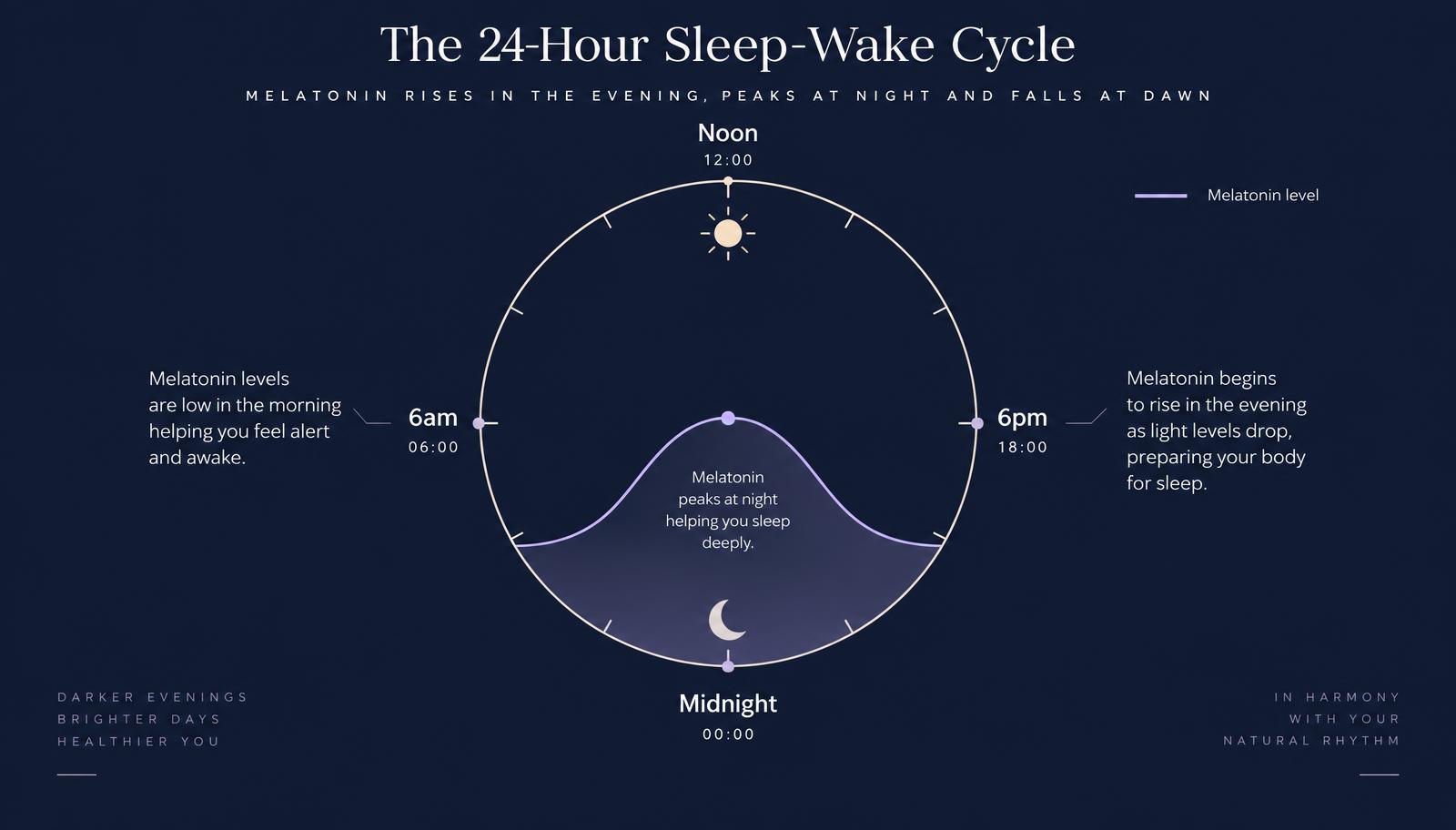 The Body ClockCircadian rhythm, daylight, evening light, time-zone changes and the routines that hold your timing steady.9 guides
 Sleep QuestionsTrouble falling asleep, night waking, irregular schedules and persistent sleep problems explained.6 guides
 Research & SafetyEvidence, reported side effects, interactions, and the groups who should seek individual advice.14 guides
 Better SleepSleep habits, morning light, caffeine, alcohol, screens and bedroom conditions — weighted honestly.7 guidesAll articlesBrowse every guide in one place, filter by topic, and start with the cornerstone reads.44 guides
Popular questions
The questions readers ask most
At a glance
The body clock across a day
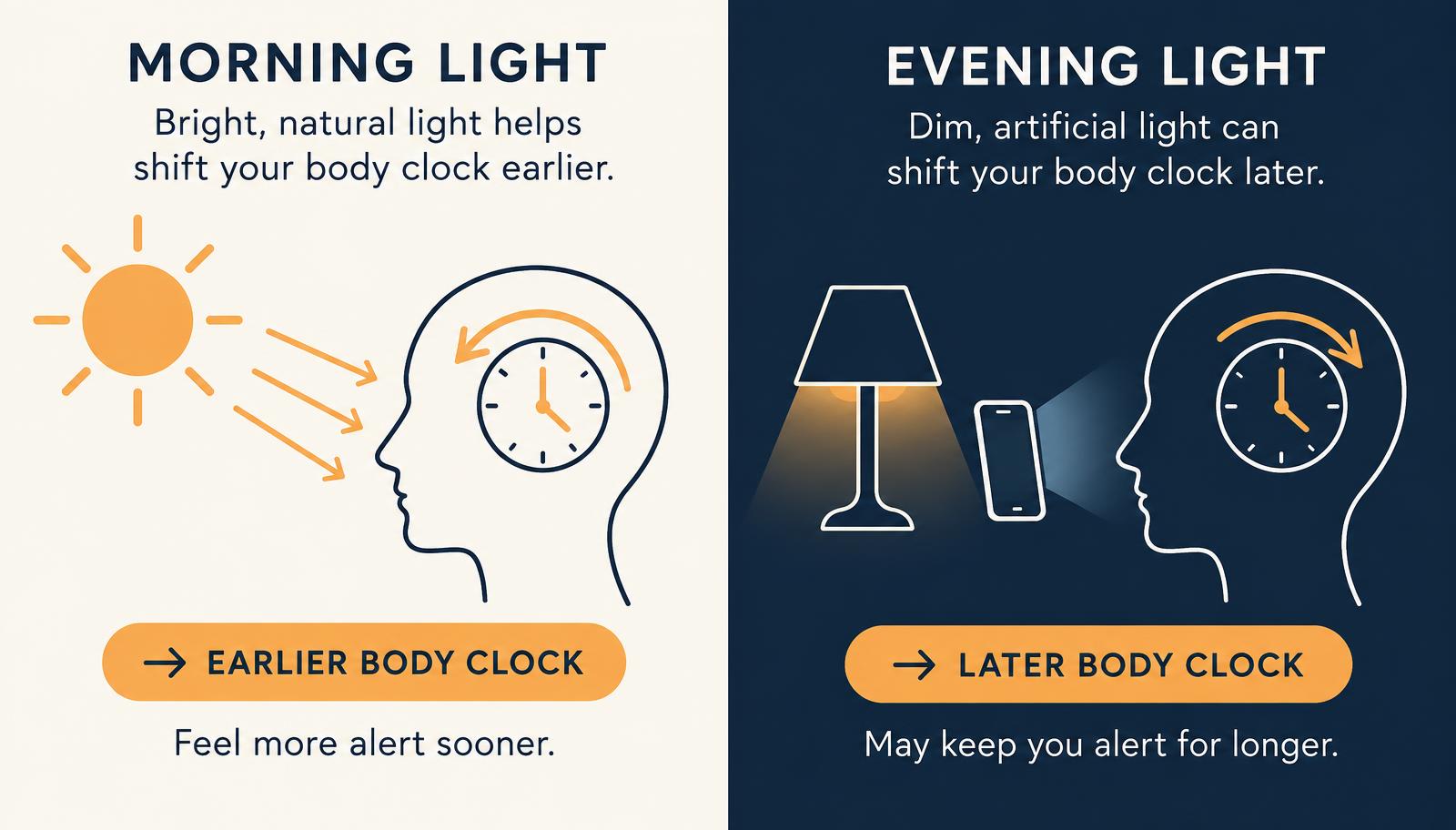
A small cluster of cells in the hypothalamus keeps roughly 24-hour time and is reset each day, mainly by the light reaching your eyes. It governs far more than sleep: body temperature, alertness and hormone release all follow the same daily curve.
Because the clock shifts gradually rather than instantly, a sudden change — a flight, a night shift, a run of late evenings — leaves you out of step for several days.
Featured deep guides
The cornerstone explanations
Longer pieces that the rest of the site builds on. Each one answers a single question thoroughly and links onward to the specifics.
Melatonin Basics
What is melatonin?
Melatonin is a hormone produced mainly by the pineal gland in the brain, released in response to darkness. It signals to the rest of the body that it is night-time, helping to time sleep rather than force it. It is not a sedative, and it does not knock you out the way a sleeping tablet might.
7 min readRead the guide →
The Body Clock
Why does light affect melatonin?
Light is the single strongest signal your body uses to time melatonin release. Specialised cells in the eye detect brightness, quite separately from normal vision, and pass that information to the brain's master clock, which controls the pineal gland. Brightness, timing and duration of light exposure all matter, not just its colour.
6 min readRead the guide →
The Body Clock
Melatonin and jet lag: understanding the connection
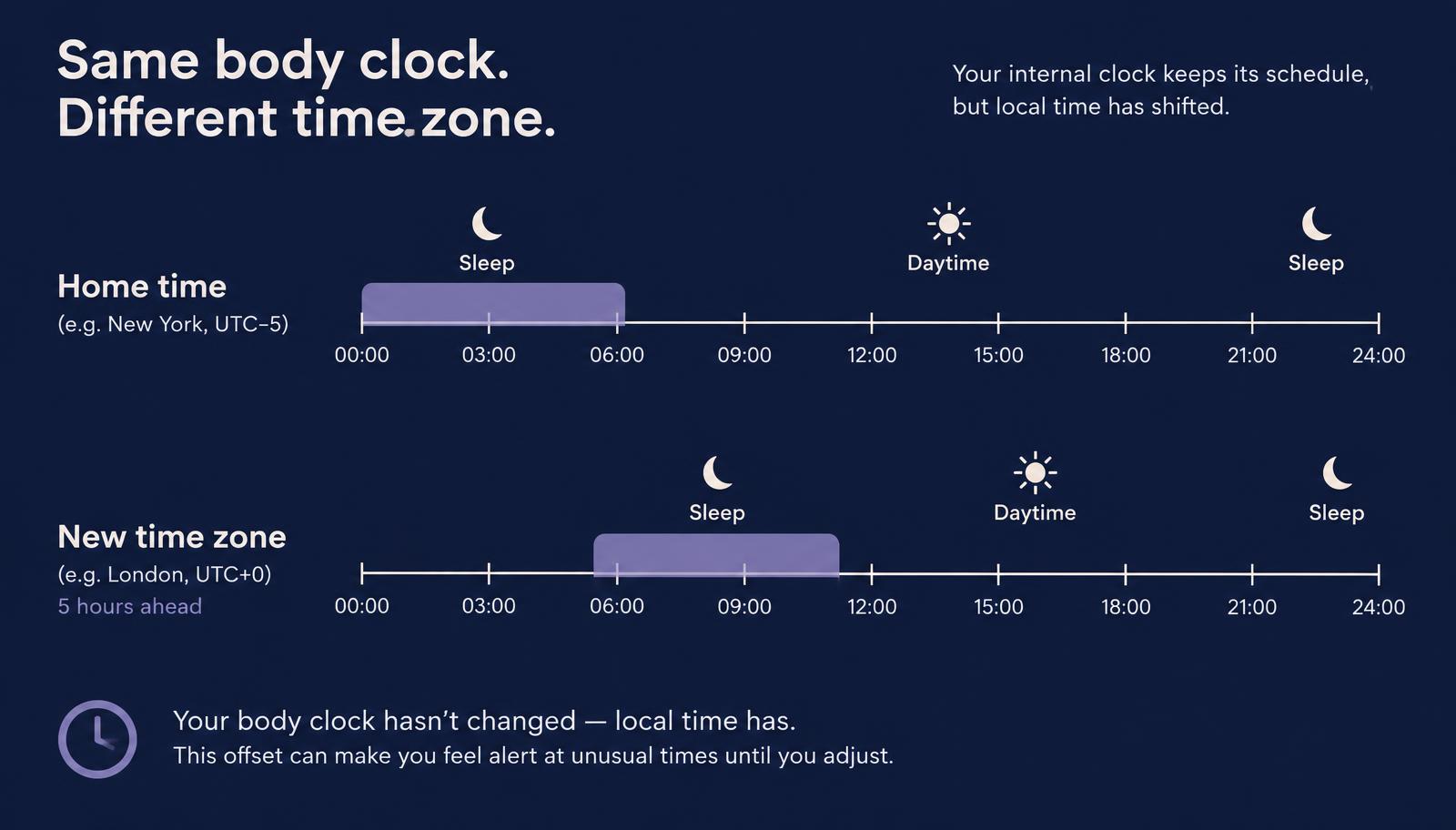
Jet lag happens because your internal body clock stays set to your home time zone while the outside world has moved on. Melatonin is one of the signals your brain uses to keep that clock synchronised, which is why researchers have studied it in relation to jet lag. The evidence is mixed and depends heavily on timing, so it's worth understanding the underlying biology rather than treating melatonin as a simple fix.
6 min readRead the guide →
Practical sleep reading
Habits that make a measurable difference
 Morning light and your body clockThe Body Clock · 6 min read
 Caffeine and sleep: why timing mattersBetter Sleep · 6 min read
 An evening routine you can actually maintainBetter Sleep · 6 min read
 Evening light, screens, and sleepThe Body Clock · 6 min readBedroom light, noise and temperatureBetter Sleep · 6 min readDaytime habits that influence sleepBetter Sleep · 6 min read
Product guide
Tablets, gummies, drops and more
See each form of melatonin side by side: how it is taken, how it is released, and what to look for on the label.
Compare melatonin productsFree tools